

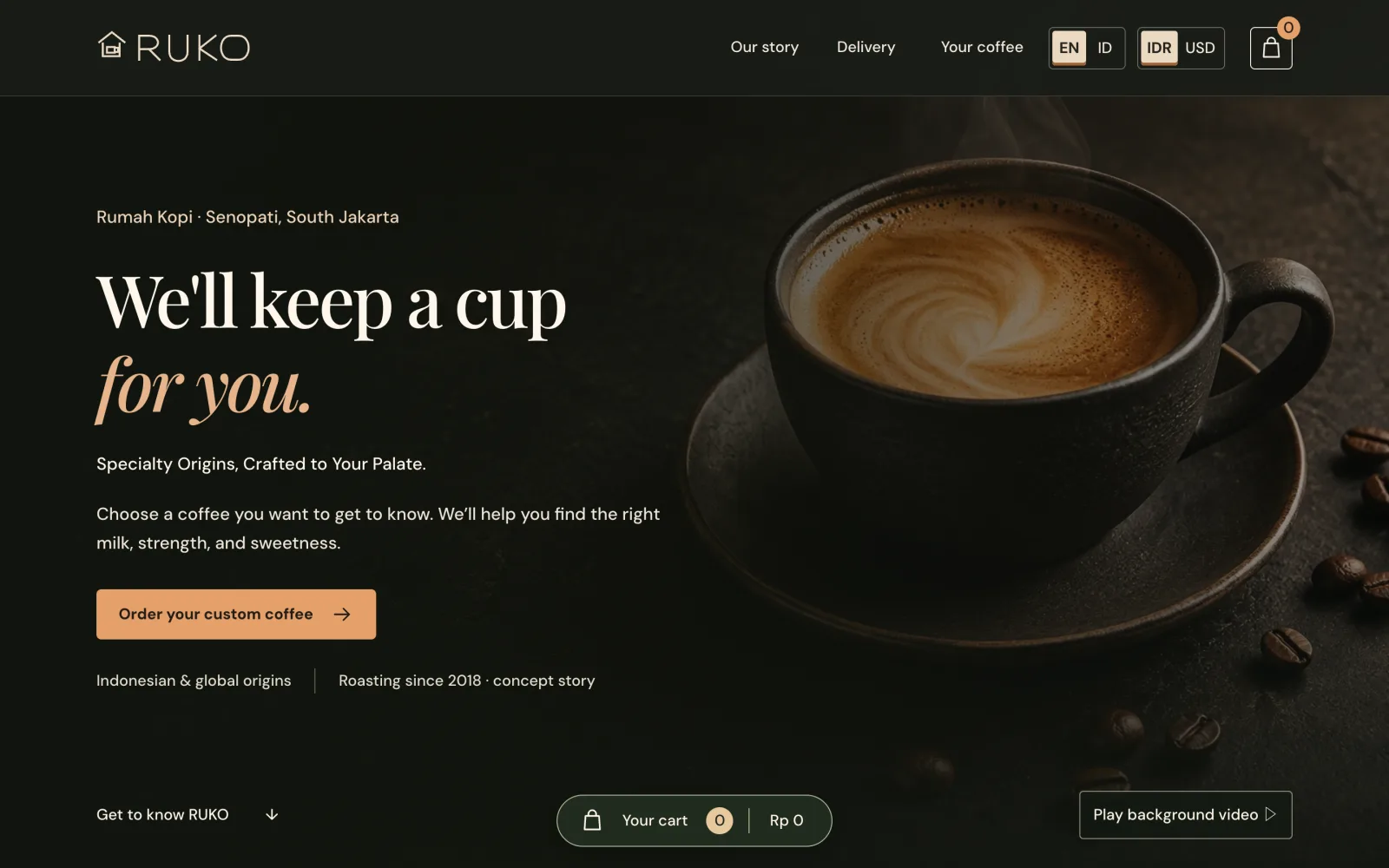
Two versions:
- Version 1: Qoder only → Built in Qoder with Sonus, with no help from Claude. The Sonus credits ran out before it was finished, so a few parts are stuck half-done.
- Version 2: finished with Claude Opus → The same site, with the missing parts completed by Claude Opus.
The challenge
On Thursday, 12 November 2026, Alibaba ran the Qoder Workshop: Agentic AI coding for real software at Treasury Tower, SCBD, Jakarta. Qoder is Alibaba's agentic coding app: instead of suggesting the next line, its agent plans the work, writes the files, runs them and fixes what breaks.
The challenge was simple to say and hard to do well: build a one-page company landing page where the content comes from open data. No lorem ipsum, no made-up numbers. If the page says something, there should be a public source behind it.
I built it in Qoder with Sonus. My part was the idea, the direction and the checking; the agent wrote the code. The challenge allowed Qoder only, so version 1 is my entry, exactly as Qoder left it.
The idea: RUKO
RUKO is short for Rumah Kopi, a fictional coffee house in Senopati, South Jakarta. A coffee shop is a good test for open data, because almost everything on its menu can be looked up: where the beans grow, how they're processed, what's in a cup of oat milk, how far the kitchen is from your door.
So rather than a brochure that says "we love coffee", RUKO is a landing page you can use: pick where it's delivered, build your own drink from real origins, see what's in it, pay with a demo checkout and follow the order to your door.
Where the data comes from
Every source is listed in the page's footer, under Sources, credits & demo notes.
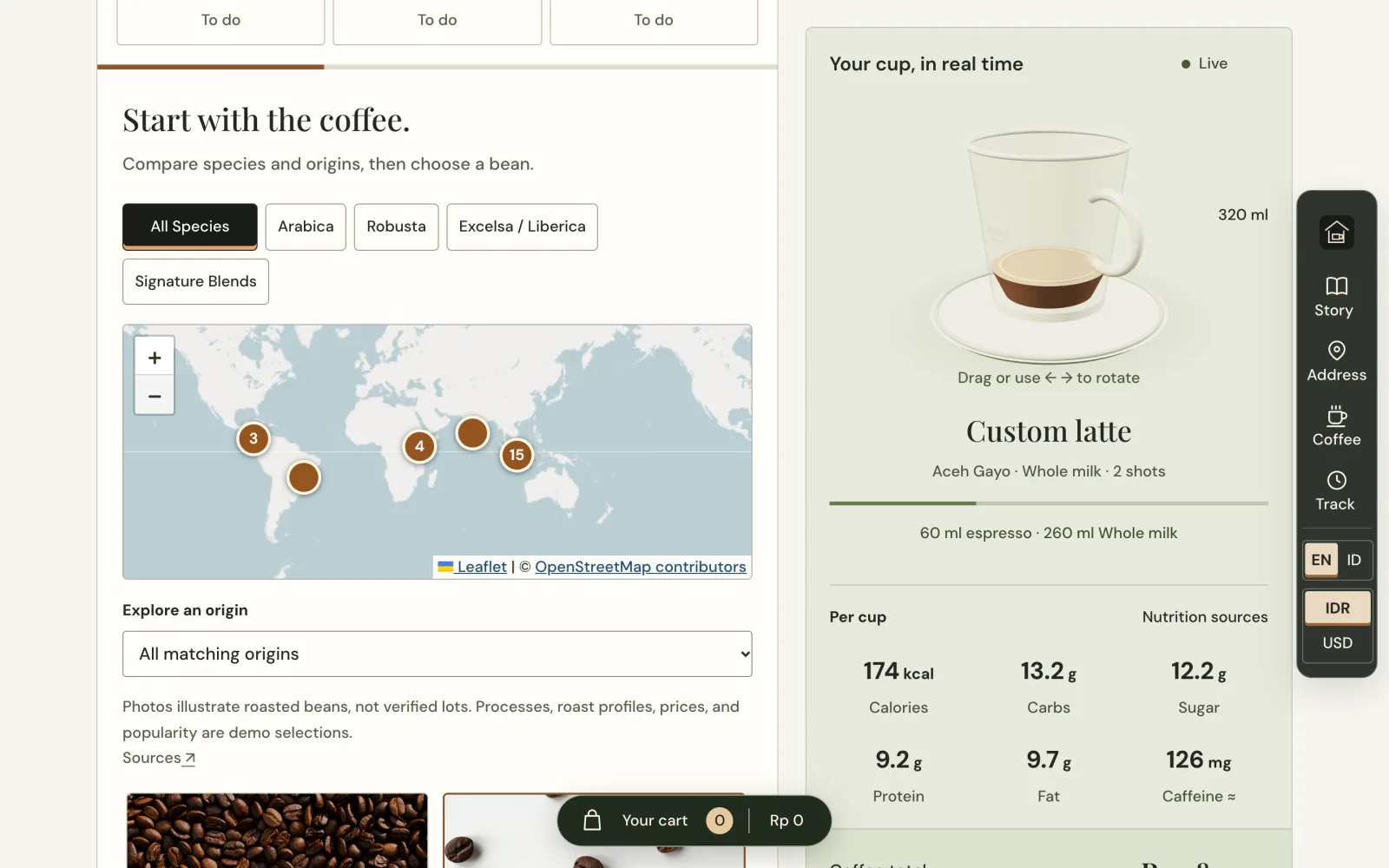
- Coffee origins. 24 coffees from 10 countries: Indonesia, Ethiopia, Kenya, Colombia, Brazil, Guatemala, Costa Rica, Vietnam, India and Uganda. Each has its species, process, roast and tasting notes, taken from public pages by green-coffee traders, Indonesia's agriculture research agency, Kew Gardens and published research. Excelsa and Liberica share a filter for browsing, and the page notes that they're separate species.
- Nutrition. Espresso, sugar, brown sugar and honey come from the USDA's FoodData Central. Milks and syrups use the makers' own published labels (Dairy UK, Oatly, Alpro, Monin), and stevia follows the FDA.
- Maps and addresses. The maps are OpenStreetMap, drawn with Leaflet, and the address search is Photon, which searches the same OpenStreetMap data.
- Photos and film. Free-licence photos from Unsplash and a film from Mixkit, each credited by name.
- Type and code. DM Sans and Playfair Display (Open Font License), Three.js for the 3D cup and QRCode.js for the payment code.
What version 1 does
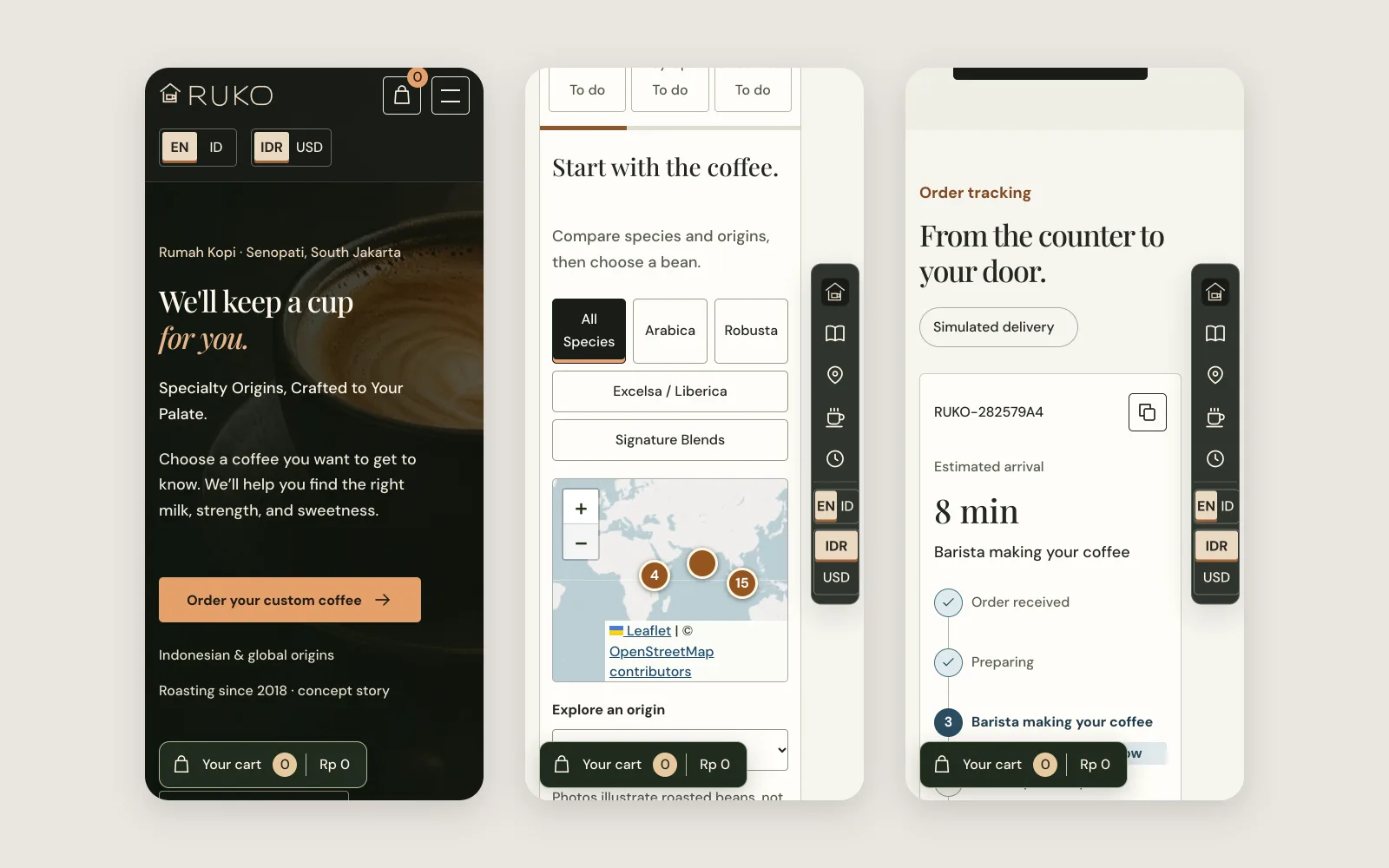
These screenshots are from version 1, as Qoder built it.
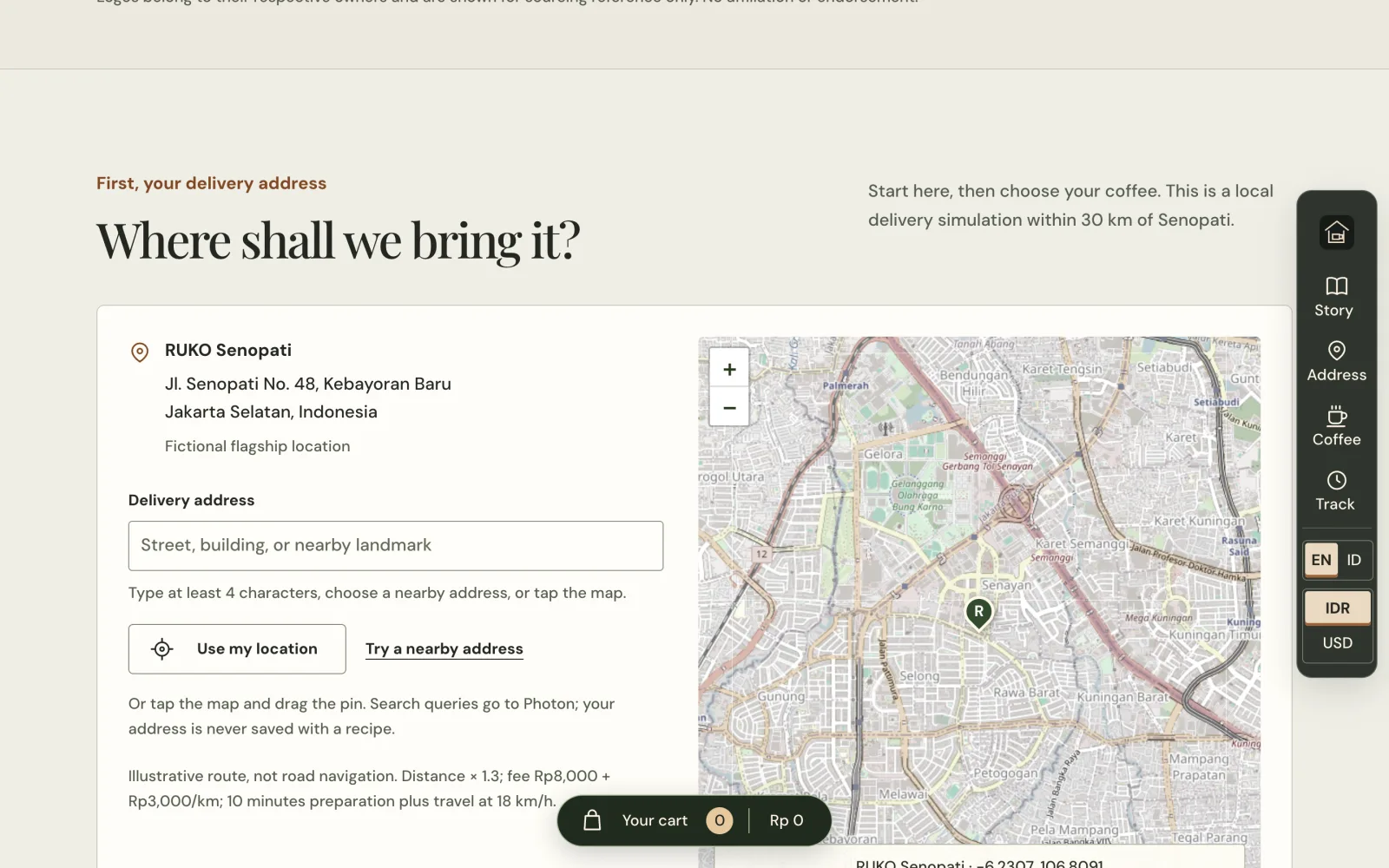
First, where should we bring it?
Ordering starts with your address, because a coffee house can only promise what it can deliver. Type a street or landmark and pick a suggestion, use your location, or tap the map. Anything outside 30 km of the Senopati counter is politely refused, and the delivery fee and time are worked out from the distance.
24 origins on one map
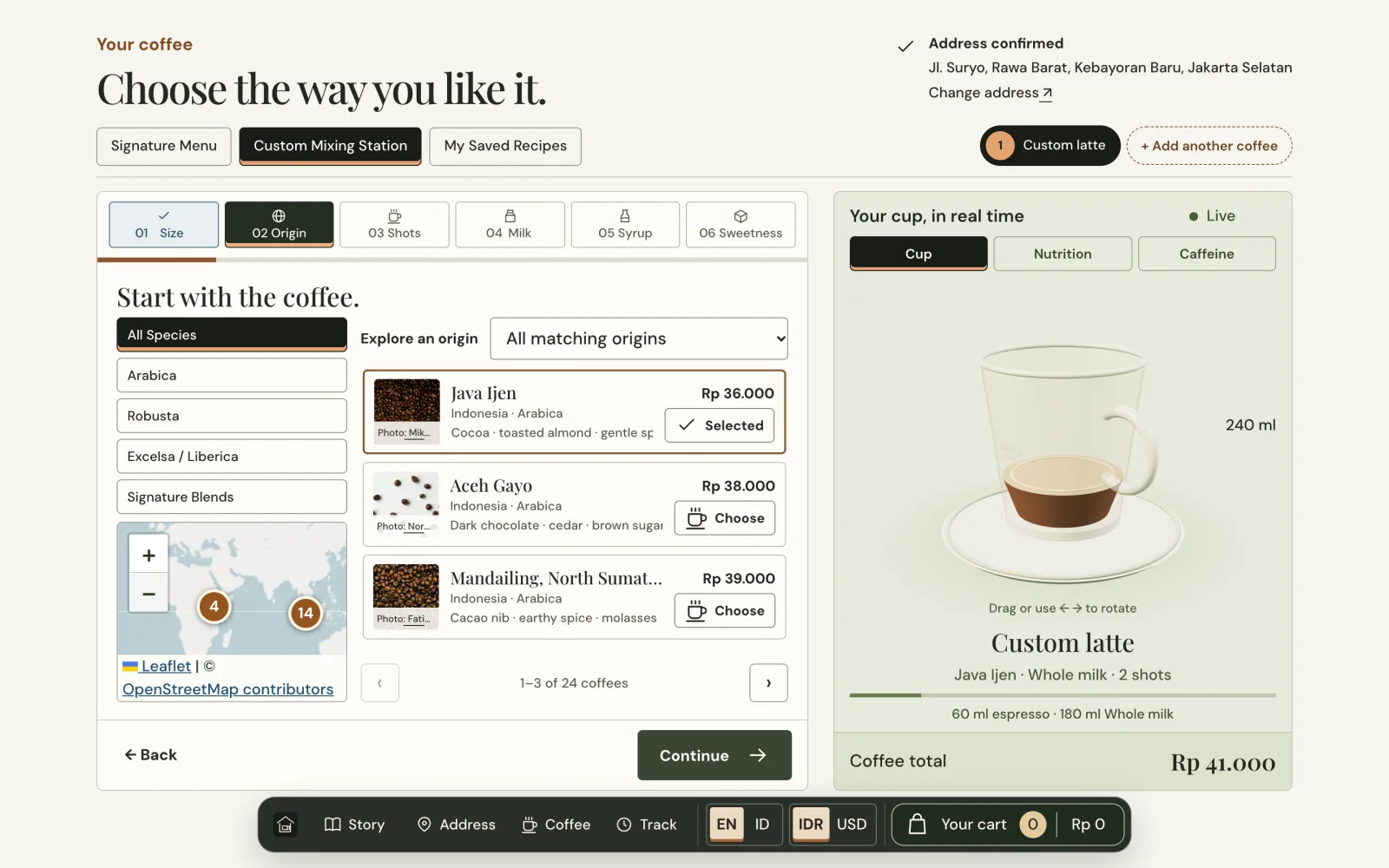
Choose a species (Arabica, Robusta, Excelsa and Liberica, or a signature blend) and the map shows where those coffees grow. Each card has the origin, process, roast and tasting notes, and links to the source.
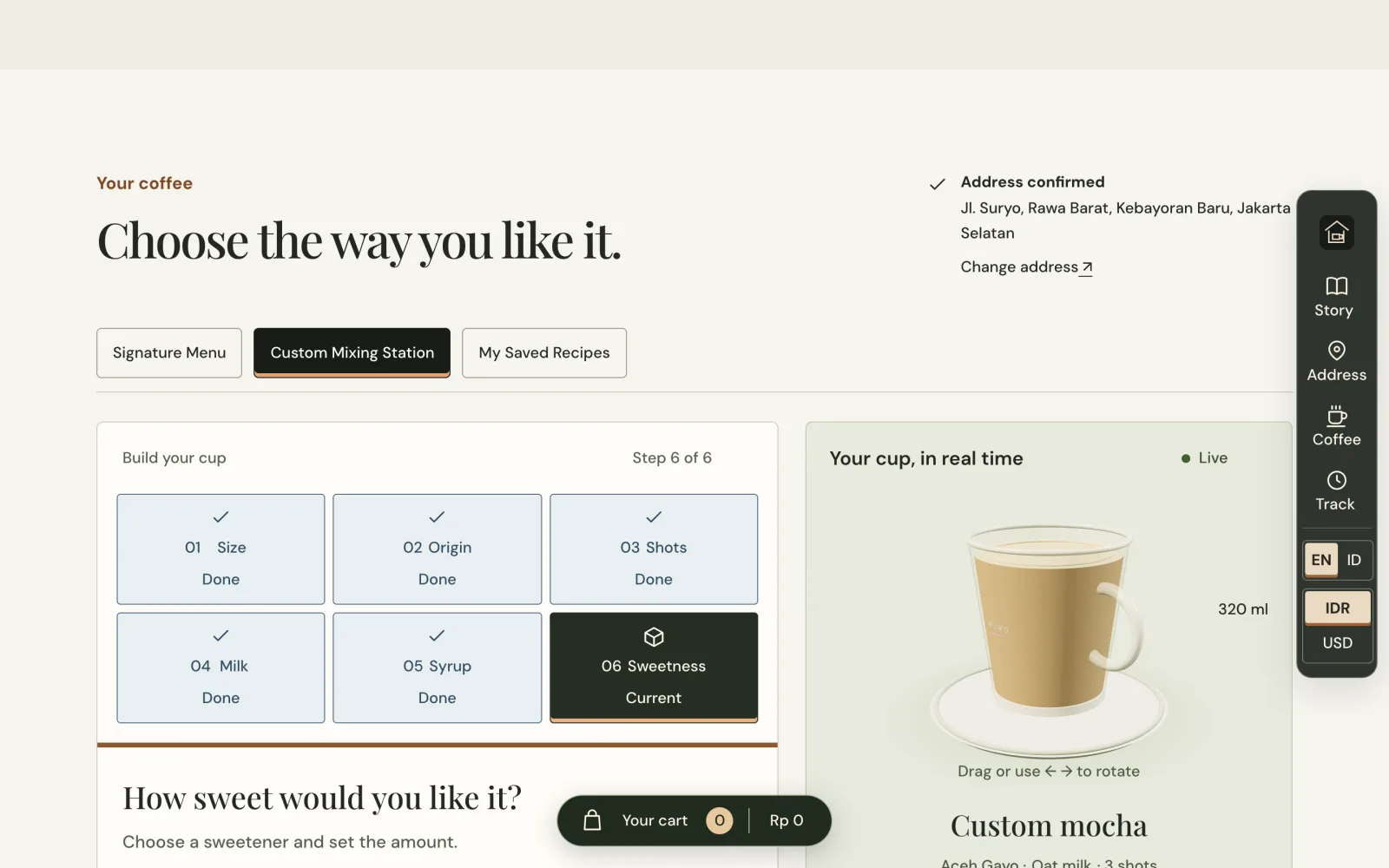
Build your cup, and watch it change
Six steps: size, origin, shots, milk, syrup and sweetness. A 3D glass beside the steps follows every choice: each shot fills it higher, the milk sets its colour, chocolate syrup darkens it, and the size makes the glass smaller or bigger. Drag it, or use the arrow keys, to turn it round.
Numbers that add up
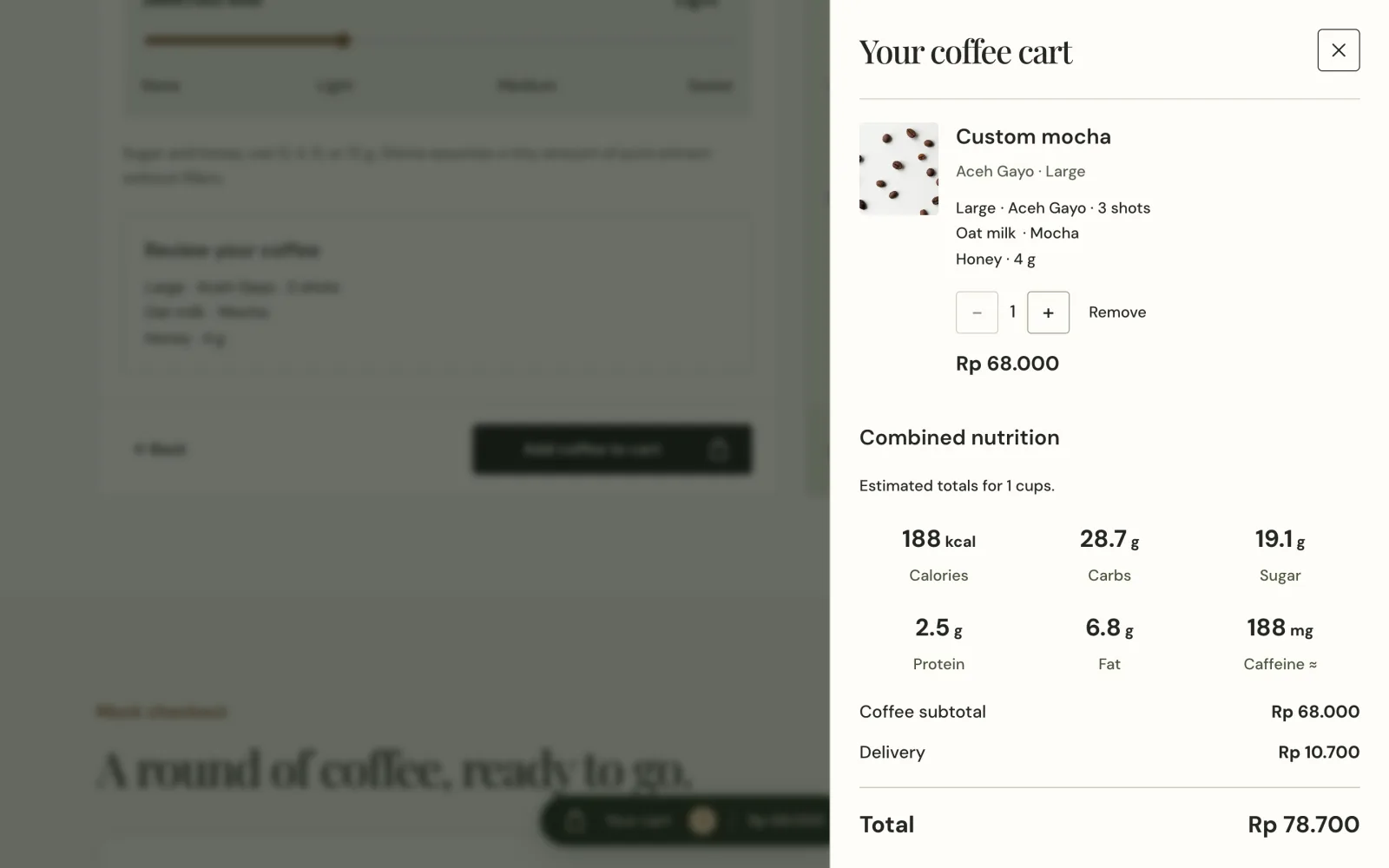
Because the nutrition comes from real per-100 g values, the totals are real arithmetic, not guesses: calories, carbs, sugar, protein, fat and caffeine for each cup and for the whole order.
A checkout that says it's a demo
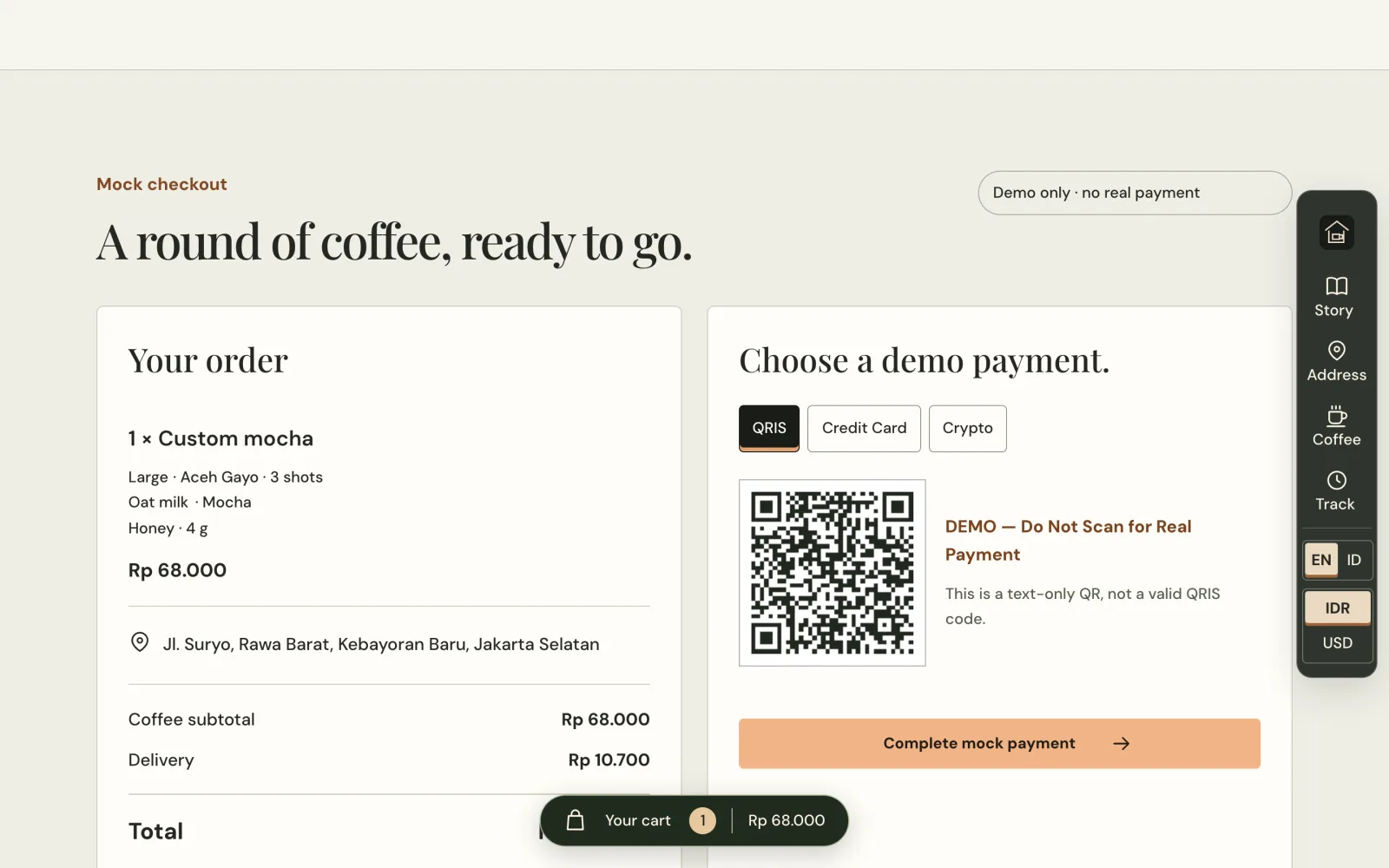
QRIS, card or crypto, all clearly marked as a demo. The QR code holds only a line of text, not a valid QRIS code; the card form only accepts the standard test card; the crypto option shows what the order would cost in BTC, ETH or USDT at a fixed demo rate. No money moves, and the receipt says so.
From the counter to your door
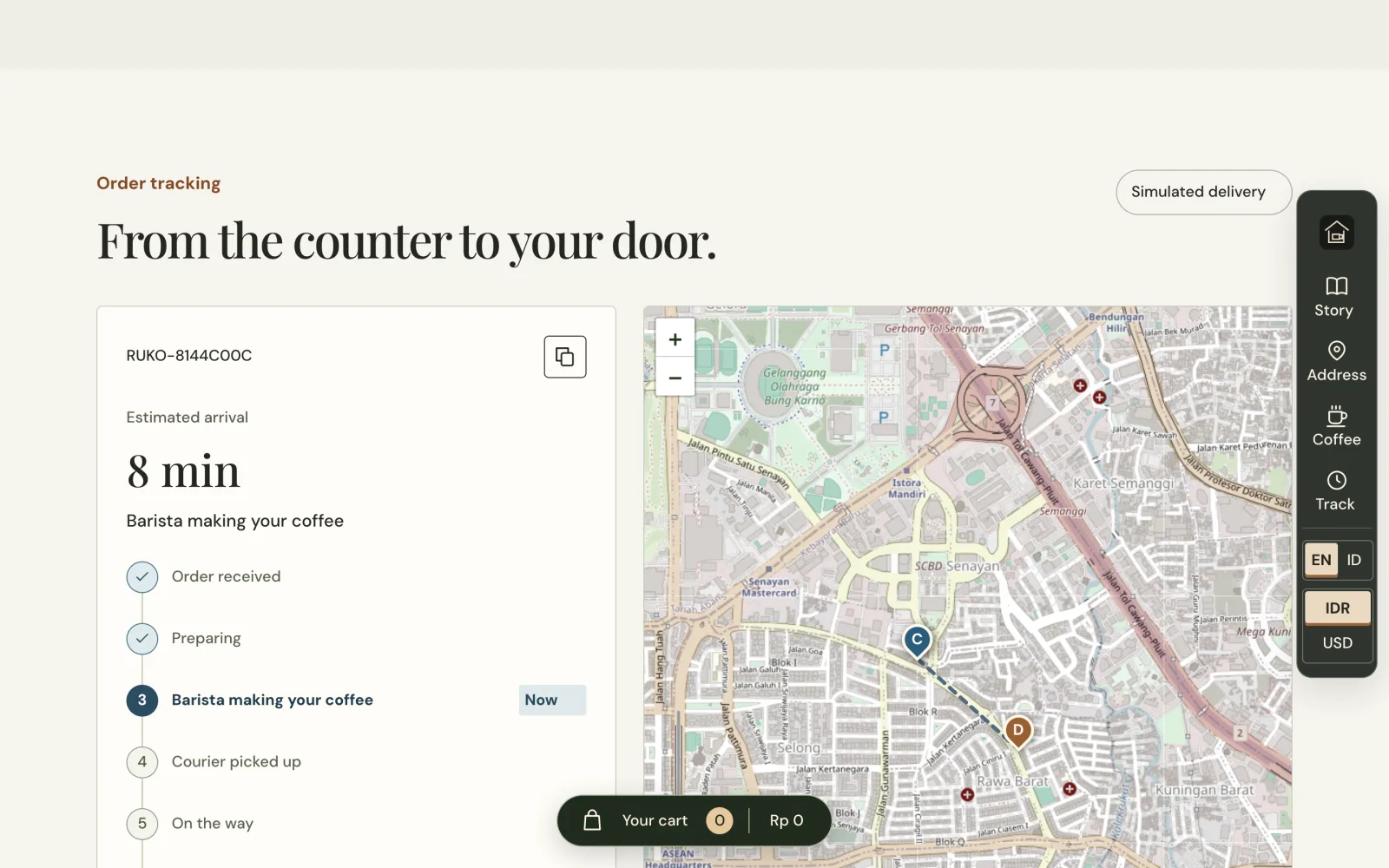
After paying, the order is tracked on the map from the Senopati counter to your address, step by step: received, preparing, barista making your coffee, picked up, on the way. When it arrives, you can save the recipe and order it again later.
People worth knowing
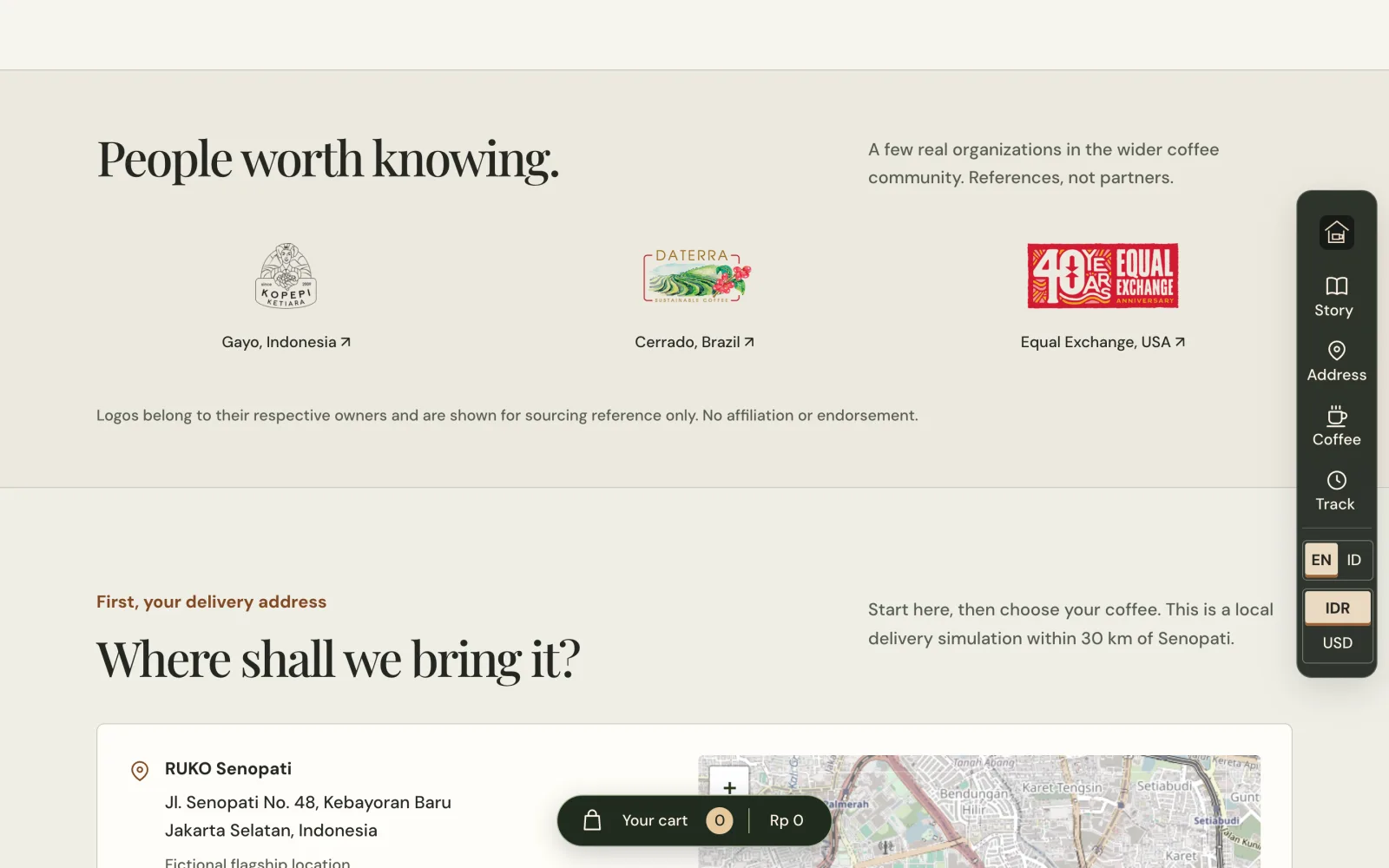
A row of real coffee organisations (Ketiara in Gayo, Daterra in Brazil and Equal Exchange in the US), each linked to their own site. The page says plainly that they're references, not partners.
On phones
Everything works the same on a phone, with a floating cart and a slim side rail to jump between sections. English or Indonesian and rupiah or dollars are one tap away, and switching them never shifts the layout.
Version 2: finishing it with Claude Opus
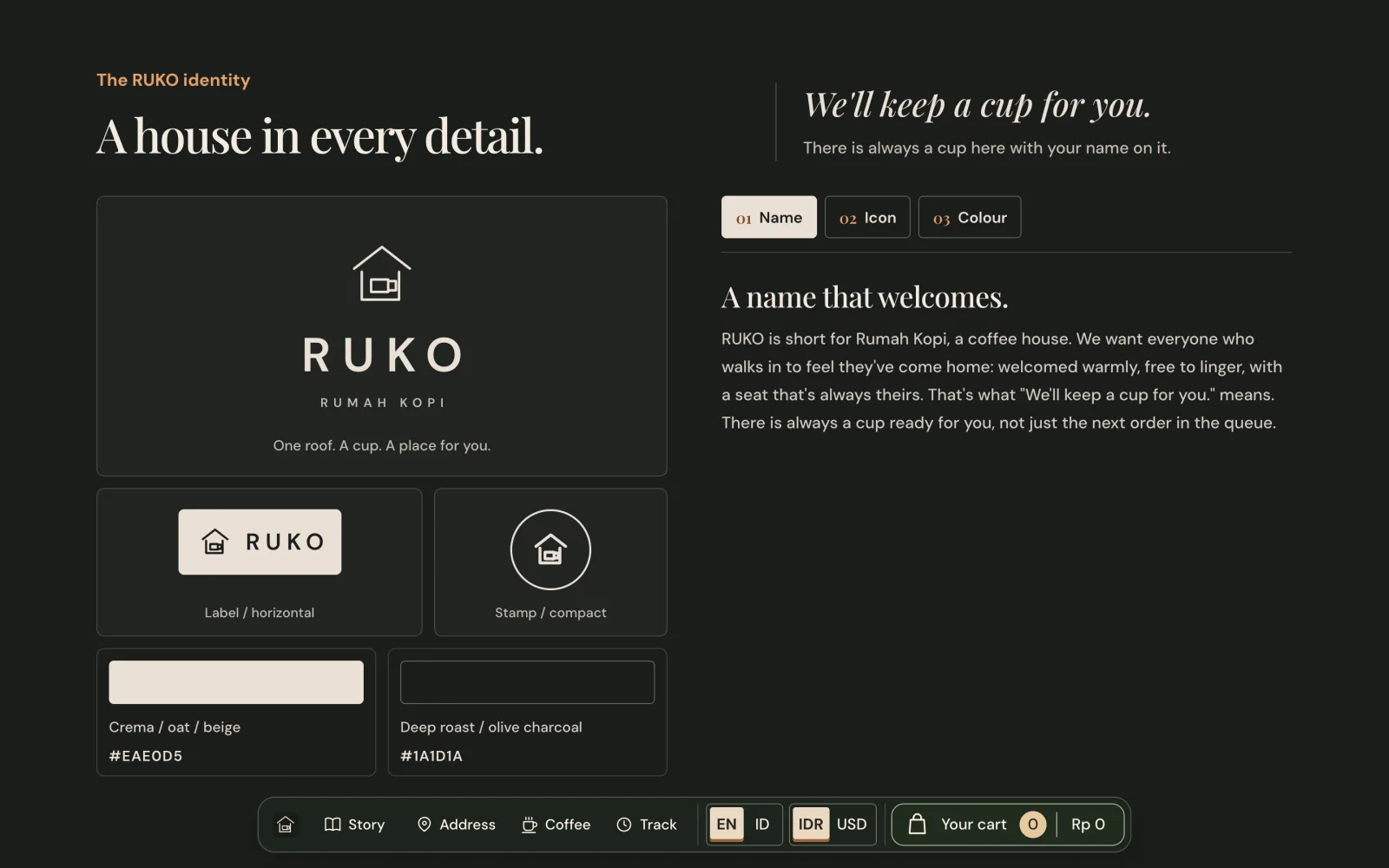
The Sonus credits ran out while two features were half-built: the brand section had its words but no styling, so its house icon showed up as a giant black shape, and the caffeine chart had its maths but was never put on the page. After the workshop I asked Claude Opus, in Claude Code, to finish them in a copy of the project, so version 1 stays exactly as Qoder left it.
The brand section, finished
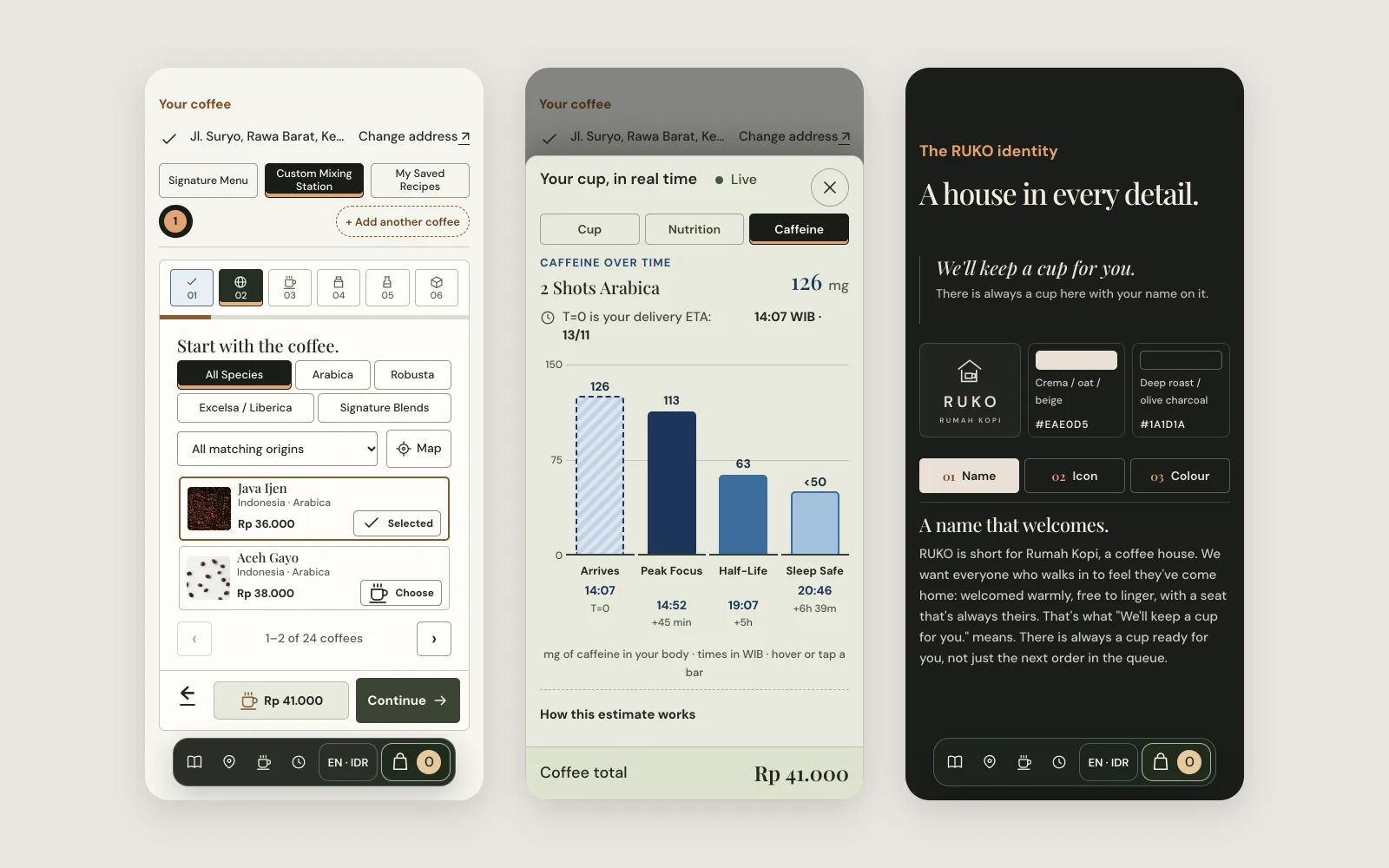
The RUKO identity now has the logo, the label and stamp versions that show how the icon adapts, the two colours, and the story behind the name, the icon and the colours, one tab at a time.
When the caffeine peaks and fades
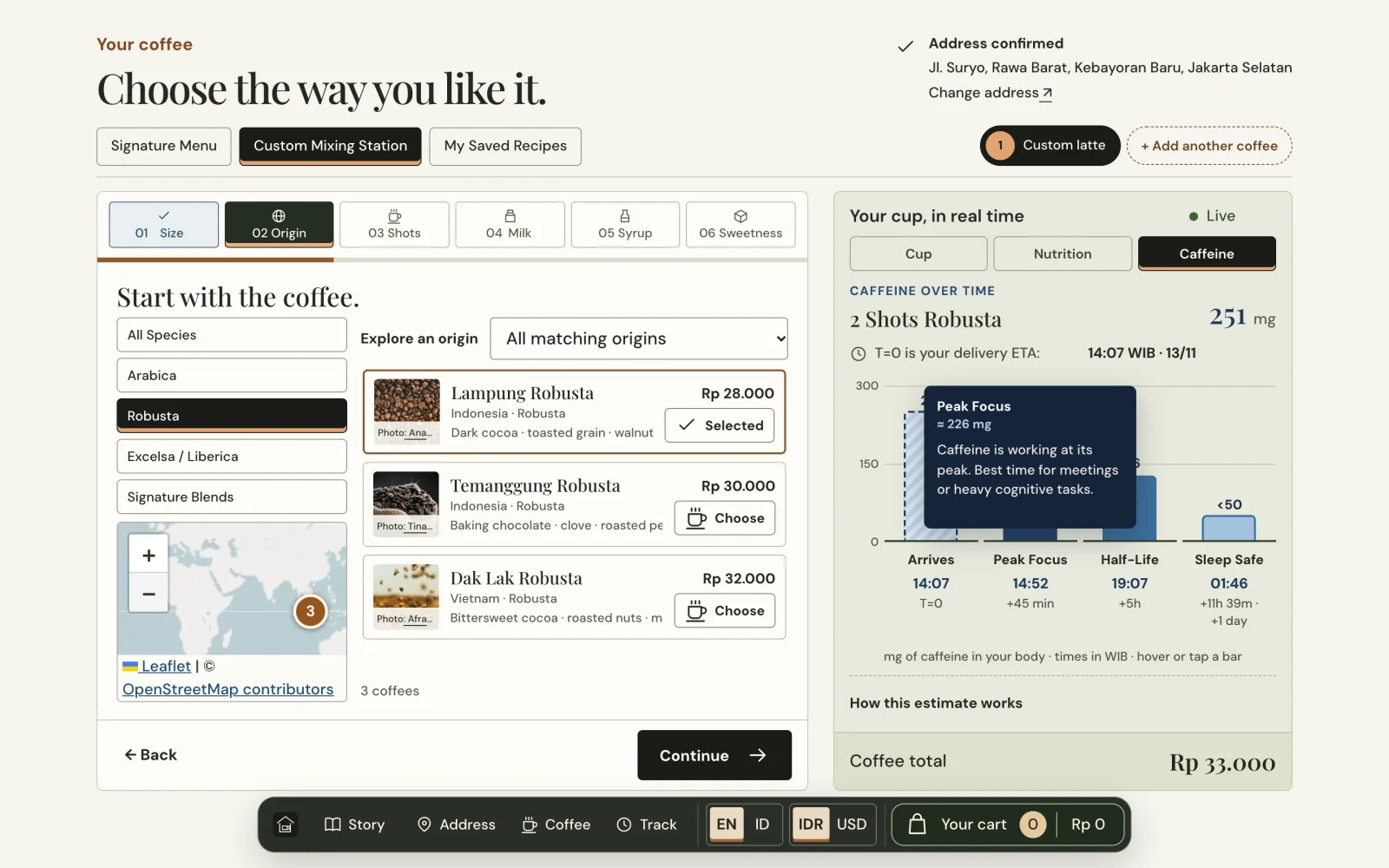
A bar chart in the live panel shows how much caffeine is in your body over time, starting when your coffee arrives: the arrival time on the delivery map is T=0. Then come Peak Focus at +45 minutes, Half-Life at +5 hours, and Sleep Safe once it drops below 50 mg. The scale follows your choices: Robusta has about twice the caffeine of Arabica, and every extra shot adds more. Hover over or tap a bar to see what that moment means.
Nutrition per cup
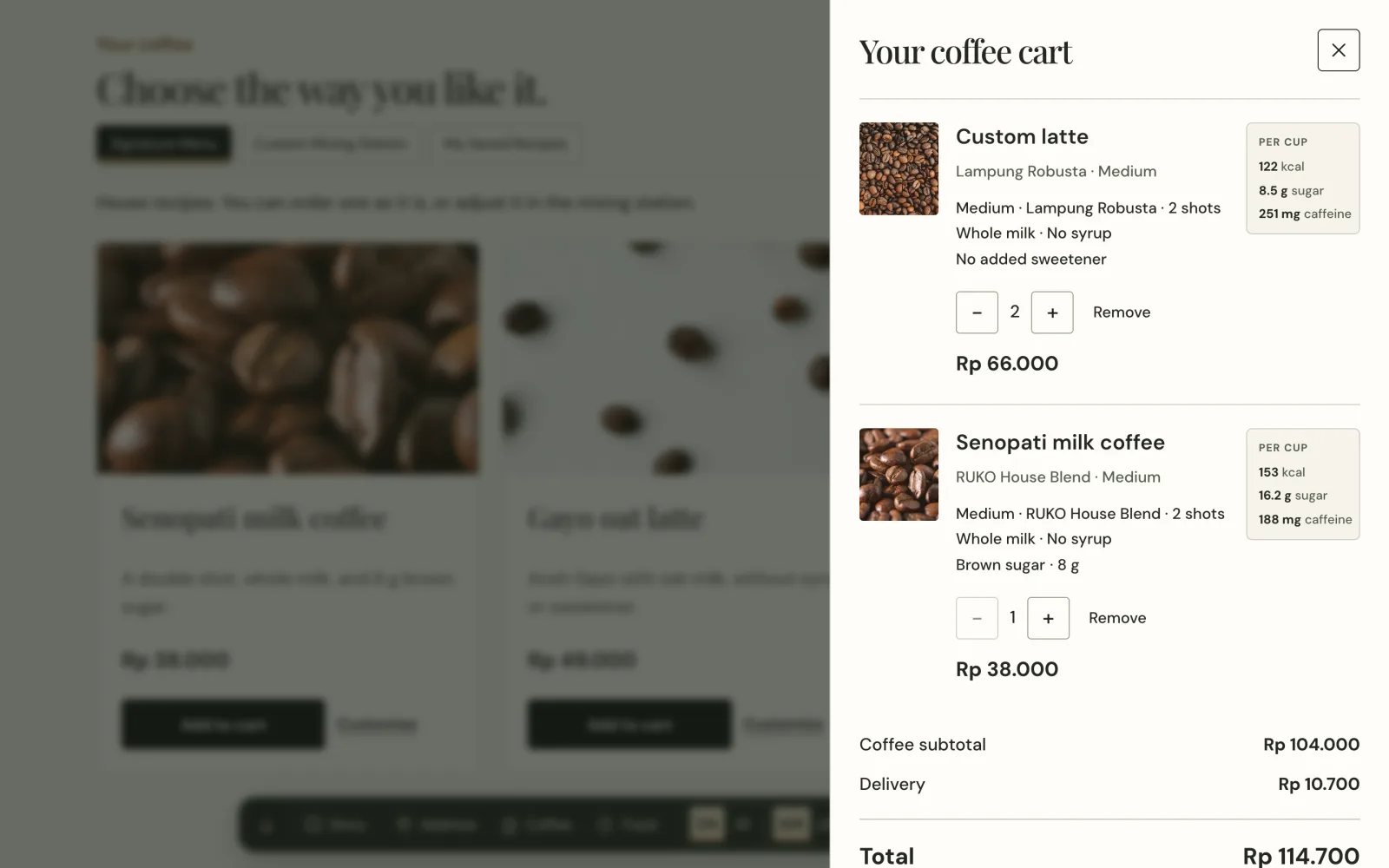
Each coffee in the cart has a small "Per cup" note right beside it: calories, sugar and caffeine for one cup, however many you order. Three numbers, not a table. The full breakdown stays in the builder's Nutrition tab.
Every section fits the screen
No more scrolling inside a section, from a phone to a big monitor. The coffee list shows as many coffees as fit, with page buttons; the live panel splits into Cup, Nutrition and Caffeine tabs; and on a phone the cup opens from a bar between Back and Continue.
There's no navbar any more. Every button sits in one bar at the bottom centre (the sections, language, currency and your cart), and it only appears once you scroll past the opening. You can also build several coffees in one order: Coffee 1, Coffee 2 and so on, with "+ Add another coffee" to start the next.
How it was built
I described the brand, the sections and a few rules to Qoder's agent: every claim needs a source, the payment must be clearly fake, it has to work on a phone and with a keyboard, and both languages must fit without moving anything. The agent wrote it as plain HTML, CSS and JavaScript, with no framework and no build step, so it opens straight from a file.
It also wrote its own tests: a browser script that clicks through every flow (address, all six steps, the cart, all three payments, tracking and saved recipes), checks the sums, runs automated accessibility checks against WCAG 2.2 AA, and tries widths from 360 px up to a 4K screen. Version 1 is hosted for free on Cloudflare Pages.
For version 2, Claude Opus ran those same tests again, added accessibility checks for the new parts, and measured every section at ten screen sizes, from a small phone to a 1080p monitor, until each one fit. It's hosted on Vercel.
RUKO is a fictional concept made for the workshop. It isn't a real shop, nothing is delivered and no payment is taken.